It was April 2025 when I last posted because, as the title states, this has been the year that broke me. And what a year it has been, and not in the triumphant, “I’m back with great news!” kind of way. More in the break your spirit, stomp you into the ground, and make you wonder if maybe you actually died and went to hell kind of way. If you were expecting a rip‑roaring return, I’m afraid you’re going to be disappointed, my dear readers.
You might remember my post about the medical crises my dad and former business partner Jason endured last March and April — including a full-on evisceration event. I wish I could say things improved after that, but they didn’t. He came out of the hospital with blood clots from a PICC line (something only an eagle-eyed nurse named Tanisha caught), full-blown pneumonia from aspirating stomach bile, congestive heart failure, neuropathy in his left leg, tremors, brain fog, dehydration, GI bleeding, infected incisions, debilitating migraines — the list felt endless. At one point he had ten specialists, and our lives revolved around doctors’ offices. It didn’t leave much room for anything else, and the level of care he needed drained us both emotionally. It was . . . a lot.
And all of this only to learn later that the original surgery was never necessary. A specialist at Duke told us he wouldn’t have operated at all given the fact the hernias in question were fatty deposits. At most, he would have recommended the old methodology, not the newer less-invasive robotic style going through the abdomen. Everything that followed — every complication, every crisis — could have been avoided if the care at Alamance Regional Medical Center (Cone Health) had been better. Had been honest.
The nurses were, by and large, wonderful. The doctors were not. Dr. Witing, Dr. Sokai, and Dr. Seng should be ashamed of how hard they pushed to discharge him, including the very day he eviscerated. If he had agreed to leave, he would have died. The paramedics would never have made it in time with nearly three feet of intestines outside his body. Their negligence could have cost me my dad.
Coping with that was brutal. And when you’re caring for someone, it’s easy to lose track of your own feelings. I tend to shove mine down and focus on what needs to be done — not always the healthiest strategy. Crying, lashing out, hiding from everyone and everything . . . none of it helped. I shut down emotionally. My motivation for things I enjoyed evaporated. Writing felt impossible. Even thinking felt like wading through wet Carolina clay.
Then I injured my right wrist last summer — a compression injury I’m still dealing with. Three cortisone shots later (the most recent guided by ultrasound), I finally feel a modicum of relief. Typing was painful for months. Even writing a grocery list hurt. I conserved what little capacity I had for things that needed to be done. The blog was optional, and truthfully, I didn’t have anything coherent to say anyway. My thoughts were a messy quagmire of depression, malaise, hopelessness, and anxiety. When I could write, I focused on my novel — about 40,000 words so far — but only in short bursts.
Meanwhile, Debbie had another stroke and had to be life‑flighted to Duke. We thought we were going to lose her last fall. Her cognition declined further, and her vision took a massive hit — about 80% gone in her right eye and 50% in her left. She never took her recovery seriously, which sounds cruel, but it’s the truth. She refused rehab, ignored her doctors, wouldn’t change her diet, and wouldn’t help my cousin lift her. Her dropping to the ground and refusing to assist during a transfer is what caused Dad’s original crisis.

It became unsustainable. I stopped transferring her years ago because she weighed more than me and repeatedly injured the knee I damaged in the car accident. The responsibility fell to my cousin Alex, who became tethered to the house. Even a quick trip to the park meant she’d call him back within thirty minutes.
Then, in late March, she had her tenth stroke — this time affecting both sides of her brain. While she didn’t lose much more function, it was the final straw. She went to a rehab facility in Greensboro, which has its own challenges since visiting takes half a day.
In late July, she decided she could walk, tried to get out of bed (despite our repeated requests for bed rails), and slid to the floor. She fractured her shoulder. But her osteoporosis is so severe — worsened by decades of smoking and poor diet — that nothing can be done. The orthopedist showed us how brittle her bones are. Plates and screws would crumble her bones; the hardware would float. It simply has to heal on its own.
She’s devastated, and the guilt we feel about her being in a facility is crushing. She cries about wanting to come home, but we can’t safely care for her here anymore. As a result, she’s taken to waging war on her CNAs and her “angel,” the coordinator who tries to involve her in activities. They took her to a baseball game, and she called us claiming she’d been kidnapped. She says the CNAs yell at her and has filed multiple complaints — including one we witnessed, where the CNA absolutely did not yell.
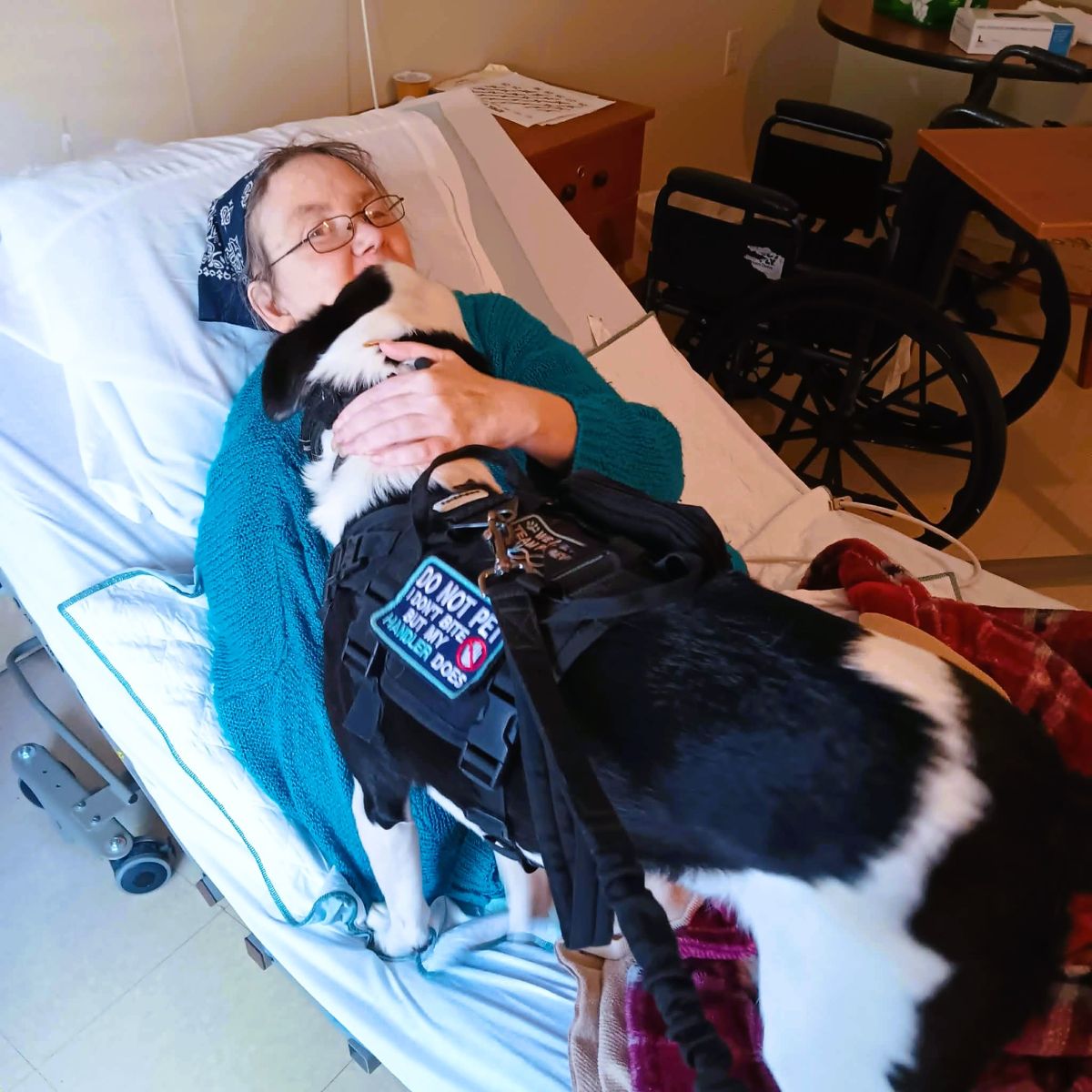
Thankfully, no one’s career has been harmed. Her cognition is low, her short-term memory nonexistent, and the emotional residue of her thoughts lingers even when the memory doesn’t. She ruminates, circling the same accusations. We try to visit weekly, but between constant doctor trips and getting sick ourselves, it’s been hard. We always bring the dogs, and they brighten her mood, even if only briefly.

At the same time, her husband Jay was diagnosed with mixed dementia in December. He has the genetic markers, and his lifelong habits — smoking since age seven, no fruits or vegetables, living on sugar, no exercise, no mental engagement — accelerated it. He’s lost his license, and my cousin doesn’t have one yet, meaning my dad or I handle all errands. Now he sleeps more than sixteen hours a day and wakes up to watch the same episode of the same show he watched the day before. He used to cycle through the same five movies, but we couldn’t take it anymore and blocked them on Netflix. His memory is gone, and we’re preparing to transition him to long-term care, like Debbie.
I know nursing homes are taboo for many people. For a long time, I felt that way too. But there’s no independence left, and — this has been a hard lesson — I am entitled to a life. I do not have to martyr myself.
Truthfully, my aunt and uncle were never really there for me. When my mom died, it was dad and me. When her mom died, it was dad and me. They showed up to rifle through my grandmother’s things, not to support us. When I was sick, they weren’t there. And yet I turned down a great job in 2021 to care for my aunt after her stroke. I’ve done the best I can. I’ve done enough. Alex deserves his life back too — he’s almost 30 and spent five years unable to leave the house for more than a couple of hours. No job, no social life. Neither of them seemed to care.
Debbie’s childhood tumor left her parents terrified she’d die at any moment, so they let her do whatever she wanted. It created lifelong learned helplessness and arrested development. Cognitive decline tends to amplify negative traits and sometimes create new ones. My uncle was never aggressive — quiet, soft-spoken. Now he squares off against my dad, calls him awful names, and does the same to his son.
I’m sure I’ve forgotten things — or blocked them out for self-preservation — but I hope this helps you understand why I disappeared. Why I couldn’t bring myself to write. Why every thought felt like another tragedy, and I didn’t want to be the person constantly unloading misery. Living it is exhausting; I can’t imagine hearing about it would be any less so.
Things have finally started to stabilize, but that’s enough for now. Part II coming later this week. Thank you to everyone who emailed kind words during these grueling months. Your support buoyed my spirits in what has been a truly dark time.
Leave a Reply